Aromatherapy Products
Tips on What to Look For When Shopping for Aromatherapy Products (and What to Watch Out for!)
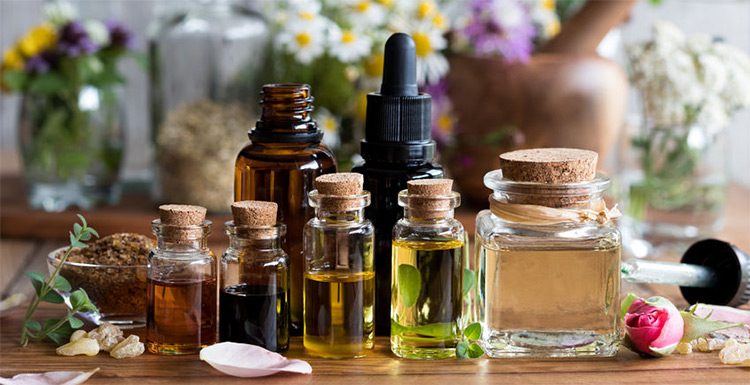
Within this article, I loosely refer to all the volatile aromatherapy oils including essential oils, absolutes and CO2s collectively as "essential oils."
For detailed information on what to look for when purchasing individual essential oils and essential oil blends, visit the How to Buy Essential Oils Article.
One of the pleasures of aromatherapy is that you can enjoy purchasing ready-made aromatherapy products and blends, or you can explore making your own aromatherapy products tailored to your specific needs and preferences (See AromaWeb's Recipe Box area for recipes that will help get you started).
The word aromatherapy traditionally leads to the vision of an individual taking a luxurious bath, receiving a relaxing massage, or someone spraying some "pretty smelling" substance into the air. Indeed, those are all beautiful and relaxing ways in which aromatherapy products are used. There, however, are far more applications for aromatherapy and aromatherapy specific products in everyday life. But what is an aromatherapy product?
Definition of an Aromatherapy Product
An aromatherapy product is one that meets the following criteria:
- Contains Essential Oils or Other Natural Aromatics
- Is Formulated to Contain Only Safe Levels of Each Included Ingredient
- Is Formulated with the Benefits of the Aromatic Ingredients in Mind
- Strives to Contain as Few Synthetic Ingredients as Possible (For safe product preservation, synthetic preservatives can be necessary.)
The word aromatherapy has caused a lot of debate since the time the word was first used in 1928. The term aromatherapy falsely implies that the aroma of essential oils is all that is used. The field of aromatherapy, however, also utilizes essential oils and other aromatic botanicals for the many other therapeutic benefits that they offer. For instance, tea tree acts as a natural germ fighter. German chamomile essential oil is a more potent anti-inflammatory than the other chamomiles, but does not smell as delightful as English or Roman chamomile. German chamomile is used in massage and other formulations to ease sore muscles. The other chamomiles also offer anti-inflammatory properties, but are less potent than German Chamomile.
Products that include synthetic ingredients are frowned upon in holistic aromatherapy. Such products do not offer the full therapeutic benefit as natural products.
Visit AromaWeb's Oil Profiles area for details and brief monographs for many essential oils.
Aromatherapy Product Categories
Below is an abbreviated list of categories that aromatherapy products frequently fall into:
- Emotional Well-Being
- Skin Care
- Hair Care
- Hygiene Products
- Medicinal
- Massage
- Personal Fragrancing
- Room Fragrancing
- Household Cleaning
- Individual Ingredients
Visit the Aromatherapy Product List for a more comprehensive list.
Buyer's Beware: The Use of the Term Aromatherapy in Marketing
To obtain the optimal therapeutic benefit of the products that you use, it is important to pay attention to ingredient and product labeling, product descriptions and marketing claims.
The use of the word aromatherapy in product marketing is not regulated in the United States, and many companies are cashing in unfairly by using the word in a manner that is inconsistent with the origins of the term. Regardless of the ingredients contained in a product, any manufacturer can utilize the word aromatherapy in their labeling, packaging and marketing materials.
The situation is unfortunately one of "buyer beware," but armed with the background information and tips described below and by reading the How to Buy Essential Oils article, you will be able to experience the wonderful benefits of holistic aromatherapy products. I am trying to giving you ips for what to look for, but I certainly don't want to discourage you. While there are unscrupulous companies out there, there are also many-many reputable companies selling highly beneficial products. Read on to gain a solid foundation that will help you shop for and select quality aromatherapy products.
Read Ingredient Lists
Read labels and familiarize yourself with the names of healthy natural ingredients and also of synthetic and toxic ingredients that you need to avoid. The Harmful Skincare Ingredients article provides details regarding the most common toxic ingredients found in skin care products.
In the U.S., most cosmetic/personal care products that fall into certain categories need to include an ingredient list that follows specific naming conventions and protocols. For those products that don't legally require a list of ingredients, reputable companies should still reveal them. If a product or Web site doesn't list the ingredients, ask for the list or shop elsewhere. Reputable aromatherapy companies realize that the use of the word aromatherapy is not regulated in the U.S. and they realize that they are competing with companies that skew the original intention of the meaning of the word. Resellers of natural aromatherapy products also realize that savvy consumers want to know exactly what ingredients are contained in their products. Having said that, those who manufacture aromatherapy products, however, are sometimes hesitant to publicize their ingredient lists because they are afraid other companies may steal their formulations or aromatic blend combinations. It's a reasonable fear and definitely a buyer's beware dilemma for consumers.
The following book is recommended as a highly useful reference to over 6,000 ingredients used in skin care, aromatherapy and cosmetic/beauty products:
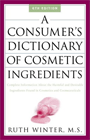
A Consumer's Dictionary of Cosmetic Ingredients, 7th Edition
Author: Ruth Winter, M.S.
Publisher: Three Rivers Press
Copyright: 2009
ISBN: 0307451119
Learn About the Company/Individual That You Are Purchasing From
Spend a little time exploring the Web sites of the companies that you are interested in purchasing from. Most reputable aromatherapy suppliers provide details about their company history, their organizational affiliations, and the educational background of those that formulate their products. Detailed product descriptions that include ingredient lists and descriptions of the benefits of each ingredient are especially helpful.
Use extra caution when purchasing natural or aromatherapy-specific products from companies that do not focus the majority of their business on natural product manufacture. I am not suggesting that you avoid or boycott such companies, but there is greater likelihood that the aromatherapy product line manufactured by such companies aren't all natural or that the ingredients they use are of inferior quality.
"Made With Essential Oils" or "Made With Natural Ingredients" Hype
Be on guard to marketing claims that state a product is "Made With Essential Oils" or "Made With Natural Ingredients." Claims like these do not state that the product is only made with the ingredient(s) specified. Such products may contain heavy proportions of synthetic fragrance oils and only contain a minute quantity of the touted ingredient. Products promoted as "Made Without Fragrance Oils" doesn't mean the product is all natural.
Look For Products Promoted as "100% Natural" or "All Natural"
Still check the ingredient list, but keeping your eye out for these phrases can help you more easily spot the all natural treasures.
Products Promoted as "Made With 90% Natural Ingredients"
Such labeling still leaves it up to you to read the ingredient label, figure out which ingredients are synthetic, and then decide if you are comfortable using the product. Some products are a serious challenge or prohibitively expensive to manufacture without the use of some synthetics. All natural shampoos with excellent lathering and clean rinsing capability is an example of such a product. Buying a product from a company that honestly states that their product is 90% all natural is still better than buying a 50% natural product from a company that uses a lot of misleading hype.
Use Caution When Purchasing Aromatherapy Products at Craft Fairs or Other Limited Time Events
Some vendors at these events have just started making aromatherapy products and are testing the waters to see how their products will sell. Others may know their customers have no recourse against them after the event is over. Some of these companies don't have product liability insurance. This is not to say that there are not highly reputable sellers at such events, but this is a caution for beginners who are not able to reliably judge quality at first.
Purchasing Individual Essential Oils (Essential Oil Singles)
For detailed information on what to look for when purchasing individual essential oils, visit the How to Buy Essential Oils Article.
Special Commentary Regarding "Aromatherapy" Candles
If you are interested in using natural candles, read the Aromatherapy Candles article.
Last but not least...
Support the Companies that Support AromaWeb
As you begin shopping for essential oils and other aromatherapy products, make it your priority to support the companies that support AromaWeb. AromaWeb's advertisers support AromaWeb's mission to be an invaluable online informational resource that provides objective in-depth aromatherapy information. Visit the Web sites of AromaWeb's banner advertisers (you can view them all within the Advertiser Spotlight area) and the advertisers located within AromaWeb’s categorized Aromatherapy Business Directory.