Essential Oil Safety
Are Essential Oils Safe?
Essential oils are highly concentrated, and they can be harmful if not used carefully.
Implementing aromatherapy into your lifestyle shouldn't cause paranoia or undue worry, but it is important to learn about, understand and heed essential oil safety. By doing so, you will be well on your way to safely enjoying the many benefits that essential oils can offer.
These essential oil safety guidelines are intended as a helpful introduction, but they should not be considered a complete reference for the proper use of essential oils.
23 Essential Oil Safety Tips
Safety Tip #1:
It is safest to consult with a qualified medical or aromatherapy practitioner before implementing essential oils into your lifestyle.

Safety Tip #2:
Essential oils should never be used undiluted on the skin. Lavender and tea tree are listed by a large number of aromatherapy sources as being oils that can be used undiluted. Undiluted use of lavender and tea tree, however, should be discouraged as severe sensitivity still could occur in some individuals. Again, the safest rule of thumb is to never use any essential oil undiluted and to be sure to dilute all essential oils adequately.
Within Essential Oils and Aromatics, Marge Clark shares her personal experiences with essential oil safety and her unfortunate long term consequences for having used undiluted lavender essential oil:
"One of my mentors reminds me 'sensitization is forever.' And I know she is right. Years ago I read the books saying that lavender oil could be used neat (undiluted). I very unwisely used undiluted lavender on broken skin, and consequently set up a sensitivity reaction. Today, almost two decades later, if I come in contact with lavender in any form, I will immediately start a new round of contact dermatitis that can take months to heal." [Marge Clark, Essential Oils and Aromatics (Sandy, UT: Silverleaf Press, 2008), 32.]
For more information, read AromaWeb's Guide to Diluting Essential Oils.
Safety Tip #3:
Consider wearing disposable gloves when handling essential oils.
When dispensing, blending, bottling or cleaning up spills, wearing disposable nitrile gloves can help reduce the chance of undiluted essential oil contacting your skin and triggering irritation or sensitization.
Avoid touching your face while working.
Remove gloves carefully (so you do not smear oil onto your wrists or fingers) and discard after use.
Safety Tip #4:
Always wash your hands after working with essential oils, even if you wore gloves or do not believe any oil contacted your skin.
Safety Tip #5:
Wash skin promptly if essential oil contacts your hands or any other area of skin to reduce the risk of irritation or accidental transfer to sensitive areas.
If essential oil comes into contact with your skin, wash the affected area with plenty of soap and water as soon as possible to reduce the chance of transferring oil to the eyes, nose or mouth. If a larger amount contacts the skin, first wipe the area with a small amount of carrier oil (to help lift the essential oil), then wash thoroughly with soap and water. If irritation occurs or persists, discontinue use and seek medical guidance.
Safety Tip #6:
Some oils can cause irritation, sensitization or allergic reactions in some individuals.
When using a new oil topically for the first time, do a skin patch test on a small area of skin (it's easy). The How to Perform a Skin Patch Test page provides details.
Safety Tip #7:
Some essential oils are phototoxic and can cause irritation, inflammation, blistering, redness and/or burning when exposed to UVA rays. For more information, learn about phototoxicity and phototoxic essential oils.
Safety Tip #8:
Discontinue using an essential oil or essential oil blend immediately if you encounter any irritation, redness or reaction.
Safety Tip #9:
Using essential oils in the bath requires special care. Never add essential oils directly to bathwater. For more information, read AromaWeb's Aromatherapy Baths article, and pay close attention to the points mentioned within the Adding Essential Oils and Bath Oils to the Bath section of the article.
Safety Tip #10:
Some essential oils should be avoided during pregnancy or by those with asthma, epilepsy, or with other health conditions.
Safety Tip #11:
Be sure to research/review the safety precautions associated with each essential oil that you use. Start by checking AromaWeb's Essential Oil Directory featuring over 130 essential oil profiles.
Safety Tip #12:
Less IS More.
When using essential oils, use the smallest amount of essential oil that will get the job done. If 1-2 drops are called for, for example, don't use more than that.
Essential oils are very concentrated. (As a sidenote, some companies or their representatives may suggest that you use as much as you want -- it's in their best interest that you go through your oils faster so you then need to reorder more frequently.
Generally speaking, it takes a lot of plant material (i.e. flower petals, leaves, needles, bark, wood, root, etc.) to obtain the botanical's essential oil by steam distillation. It's wasteful to use more essential oil than is needed for your particular application.)
Safety Tip #13:
Not all essential oils are suitable for use in aromatherapy.
Wormwood, pennyroyal, onion, camphor, horseradish, wintergreen, rue, bitter almond and sassafras are examples of some of the essential oils that should only be used by qualified aromatherapy practitioners, if ever at all. For more information, view AromaWeb's Hazardous Essential Oil List.
Safety Tip #14:
Essential oils oxidize over time and can become more sensitizing/irritating. Avoid using old or improperly stored essential oils for therapeutic applications. For more information, read AromaWeb's Essential Oil Shelf Life article.
Safety Tip #15:
Avoid using essential oils near the genitals, mouth, nose, eyes and ears.
Safety Tip #16:
Essential oils do not stay mixed with water and should never be added to bathwater without first being diluted/solubilized.
Essential oils that are at higher risk of causing irritation and sensitization should be avoided in the bath, even if you solubilize them.
Safety Tip #17:
Use extreme caution when using oils with children or the elderly. Be sure to first read the recommended dilution ratios for children.
Safety Tip #18:
Never let children use essential oils without the presence of an adult knowledgeable about their use.
Most essential oils smell wonderful and many essential oils such as citrus oils can smell like they are "yummy" and safe to drink. ALWAYS keep your essential oils away from children. Treat the oils like medicines that are poison in unknowing hands.
Safety Tip #19:
The same essential oils and blends that we use on ourselves are not always safe to use on our dogs, cats, birds, horses or other pets. For more information, read AromaWeb's Aromatherapy for Animals and Pets article.
Safety Tip #20:
Diffuse essential oils sensibly. They should not be continuously diffused. Be sure you are diffusing in a well ventilated space. Be extremely careful when diffusing in the proximity of others. For more information about diffusion safety considerations, Read AromaWeb's Essential Oil Diffuser Safety Tips.
Safety Tip #21:
Essential oils should not be taken internally without guidance by a qualified practitioner or until you have gained adequate knowledge and understanding of the risks and safe internal applications and dosages.
Even though essential oils are cold pressed or steam distilled from a range of citrus and common spices like Lemons, Oranges, Grapefruits, Allspice, Basil, Black Pepper, Cinnamon, Clove, Fennel, Ginger, Rosemary and a number of other botanicals that are routinely ingested without the need for precautionary usage info, essential oils are highly concentrated and should not be ingested without thorough understanding of appropriate usage and risks for each oil. For more information, read Internal Use of Essential Oils.
Safety Tip #22:
Essential oils are flammable. Keep them out of the way of fire hazards.
Safety Tip #23:
CO2 extracts can have differing safety precautions than essential oils.
CO2 extracts share some similarities with essential oils. However, the chemistry of CO2 extracts can differ from their essential oil counterparts. Not much specialized safety information is available for CO2 extracts. Use CO2 extracts with great care and do not assume that every CO2 extract has the same safety precautions as its essential oil counterpart. Ginger Total CO2 Extract, for example, is much more potent than Ginger Essential Oil.
Also See:
- Alliance of International Aromatherapists Safety Information
- National Association for Holistic Aromatherapy Safety Information
- International Federation of Professional Aromatherapists Statement on Internal & Neat Use of Essential Oils
Comprehensive Essential Oil Safety Information:
For the most reliable, in-depth information at your fingertips, obtain the second edition of Essential Oil Safety by Robert Tisserand and Rodney Young.
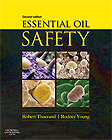
Essential Oil Safety: A Guide for Health Care Professionals, Second Edition
Author: Robert Tisserand and Rodney Young
Publisher: Churchill Linvingstone
Copyright: 2013
Number of Pages: 784
ISBN: 0443062412 / 978-0443062414