Bay Laurel Essential Oil (Laurel Leaf Essential Oil)
Laurus nobilis
Description
Bay Laurel Essential Oil is sometimes known as Laurel Leaf Essential Oil.

Bay Laurel Essential Oil and Bay Essential Oil (Pimenta racemosa) are sometimes confused for one another due to their similar common names. Though they share some broad aromatic similarities, both are very different essential oils.
Aromatically, Bay Laurel's camphorous and spicy notes marry nicely with its softer sweet, fruity/floral notes.

Emotionally, I've always considered Bay Laurel Essential Oil wonderful for promoting confidence and for helping me maintain my courage and focus when dealing with challenges or new ideas. Recently, I noticed that Valerie Ann Worwood also shares this about Bay Laurel Essential Oil: "To encourage confidence, fortitude, inspiration, protection, direction and creativity." [Valerie Ann Worwood, Aromatherapy for the Soul (Novato, CA: New World Library, 1999), 202.]
Bay Laurel Essential Oil is heralded for being an effective expectorant, and can be a welcome addition to diffuser blends to help combat cold and flu symptoms.
As the safety section below states, Bay Laurel Essential Oil is more likely to cause dermal irritation or sensitization. Use with extreme care and in extremely low dilutions (if at all) for topical applications.
For more information about Bay Laurel Oil, read the details shown below.
Bay Laurel Essential Oil Benefits and Uses
- Amenorrhea
- Colds
- Flu
- Loss Of Appetite
- Tonsillitis
Source: Julia Lawless, The Encyclopedia of Essential Oils (Updated Edition) (London: Harper Thorsons, 2014), 118-119.
Botanical Name
Plant Family
Common Method of Extraction
Steam Distilled
Plant Part Typically Used
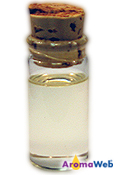
Color
Clear
Consistency
Thin
Perfumery Note
Top
Strength of Initial Aroma
Medium - Strong
Aromatic Description
Bay Laurel Essential Oil smells herbaceous, fruity, fresh and camphorous.
Sustainability and Conservation Status
Least Concern
Source: https://www.iucnredlist.org/species/203351/119996864
Last Accessed: February 14, 2026
Exception: It is considered Endangered in Albania and Slovenia according to pages 9 and 11 of the report Threatened, Endangered And Vulnerable Tree Species: A Comparison Between FRA 2005 And The IUCN Red List.
To learn more about the conservation status of essential oil bearing plants and how to use the IUCN Red List of Threatened Species, please refer to AromaWeb's Guide to Essential Oils and Sustainability.
Major Constituents
- 1,8-Cineole
- a-Pinene
- a-Terpinyl Acetate
- Linalool
- B-Pinene
See Essential Oil Safety for a more complete list of typical constituents.
Source: B.M. Lawrence, Progress in Essential Oils. (Perfumer & Flavorist 21 no. 4, 1995), 51-52. Source cited in Robert Tisserand and Rodney Young, Essential Oil Safety (Second Edition. United Kingdom: Churchill Livingstone Elsevier, 2014), 323.
Bay Laurel Essential Oil Safety Information
Tisserand and Young indicate that there is generally a low risk of sensitization though some Bay Laurel Essential Oils are more prone to skin sensitization. They recommend a dermal maximum of 0.5% and advise to use with caution with skin that is hypersensitive or damaged/diseased. Tisserand and Young add that Bay Laurel Essential Oil is potentially carcinogenic and that oils high in 1,8 cineole may cause CNS and breathing problems in young children. Reading Tisserand and Young's full profile is recommended. [Robert Tisserand and Rodney Young, Essential Oil Safety (Second Edition. United Kingdom: Churchill Livingstone Elsevier, 2014), 323.]
This essential oil poses a higher risk of causing irritation and sensitization when used in the bath. Avoid using it in the bath, even if it is solubilized/diluted.
General Safety Information
Do not take any oils internally and do not apply undiluted essential oils, absolutes, CO2s or other concentrated essences onto the skin without advanced essential oil knowledge or consultation from a qualified aromatherapy practitioner. For general dilution information, read AromaWeb's Guide to Diluting Essential Oils. If you are pregnant, epileptic, have liver damage, have cancer, or have any other medical problem, use oils only under the proper guidance of a qualified aromatherapy practitioner. Use extreme caution when using oils with children and be sure to first read the recommended dilution ratios for children. Consult a qualified aromatherapy practitioner before using oils with children, the elderly, if you have medical issues or are taking medications. Before using this or any essential oil, carefully read AromaWeb's Essential Oil Safety Information page. For in-depth information on oil safety issues, read Essential Oil Safety by Robert Tisserand and Rodney Young.
Shelf Life
Important Information About the Profiles
The essential oil information provided on AromaWeb is intended for basic educational purposes only. The references to safety information, test results, constituents and percentages is generalized information. Essential oils can vary greatly in composition. The data is not necessarily complete and is not guaranteed to be accurate. The essential oil photos are intended to represent the typical and approximate color of each essential oil. However, essential oil composition and color can vary based on harvesting, distillation, age of the essential oil and other factors. Profiles for several CO2 Extracts and absolutes are included within the directory, and are denoted as such.