Palo Santo Essential Oil
Bursera graveolens
Description
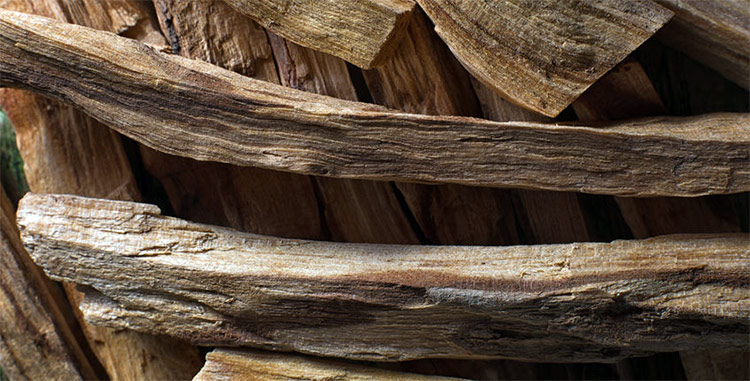
Palo Santo is a revered tree native to South America. Palo Santo Essential Oil is considered a cousin to Frankincense Oil because both share similar constituents (primarily Limonene), slightly similar aromas and because both have similar applications.
Palo Santo Essential Oil is gaining more widespread use within holistic aromatherapy. However, there is great concern regarding the sustainability of Palo Santo Essential Oil. When purchasing the oil, it is very important that you ensure that you are purchasing oil that is distilled specifically from Bursera graveolens and that you source it only from reputable suppliers that are mindful and actively support the sustainability of this revered tree. For more information, see the Sustainability and Conservation Status section below.
Loosely translated, Palo Santo means Holy Wood. Palo Santo has been used for hundreds of years by native shamans for spiritual applications. For those that integrate essential oils within meditation, prayer or other spiritual applications, Palo Santo is an oil to pay close attention to.
I personally find Palo Santo Essential Oil to be particularly grounding and calming, and I see it as an important oil for use within Chakra applications. I am repeatedly reading that use of the oil can help clear a space of negativity.
The aroma of Palo Santo Essential Oil is uniquely sweet, balsamic and woody. Palo Santo loosely reminds me of an intoxicating combination of frankincense, atlas cedar, sweetgrass, lemon and a subtle hint of mint.
Emotionally, Palo Santo Essential Oil is grounding and elicits a sense of peacefulness and calm. I can see the possibility for Palo Santo Oil to be helpful for anxiety, emotional trauma and depression.
Palo Santo Essential Oil Benefits and Uses
Palo Santo Essential Oil is highly regarded for spiritual applications, uses within vibrational work and for helping to clearing negativity. It may offer some benefit as an insect repellent. It offers possible use for coughs, bronchitis and other respiratory concerns.
- Joint Pain
- Inflammation
- General Aches And Pains
- Arthritis
- Headaches
- Allergies
- Migrain
- Stress
- Anxiety
- Panic
- Dizziness
- Nervousness
- Concentration
- Immune System Support
- Negativity
- Respiratory Infections
- Circulatory Stimulant
Source: Neryls Purchon and Lora Cantele, Complete Aromatherapy & Essential Oils Handbook for Everyday Wellness (Toronto ON: Robert Rose, 2014), 93.
Botanical Name
Plant Family
Common Method of Extraction
Steam Distilled
Plant Part Typically Used
An essential oil is also available that is steam distilled from the fresh fruits of the living tree. The aroma and composition of Palo Santo Fruit Essential Oil differs from that of Palo Santo Essential Oil that is distilled from the wood. This profile pertains specifically to the essential oil that is distilled from the wood.
Color
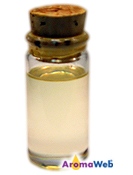
Clear - Pale Yellow
Consistency
Thin
Perfumery Note
Middle
Strength of Initial Aroma
Medium
Aromatic Description
Palo Santo Essential Oil smells woody, sweet, balsamic and slightly fruity.
Sustainability and Conservation Status
Least Concern
Source: https://www.iucnredlist.org/species/67836767/144249196
Last Accessed: February 15, 2026
Critically Endangered
Source: Palo Santo (Bursera graveolens) is considered Critically Endangered in Peru according to page 17 of the report Threatened, Endangered And Vulnerable Tree Species: A Comparison Between FRA 2005 And The IUCN Red List. Although the IUCN Redlist defines Bursera graveolens as being of least concern, Dr. Kelly Ablard shared this clarifying statement:
Bulnesia sarmientoi [A synonym of Plectrocarpa sarmientoi] is classified as endangered by the IUCN and is trade-protected by CITES. Bursera graveolens is not endangered, it is possibly in more peril having received the status as critically endangered in Peru per the 2005 Global Forest Resource Assessment (GFRA) which follows guidelines set out by the IUCN. Although this status may have changed since 2005, unless there is sound evidence stating otherwise, we advise working with the species as reflected by the most recent assessment. [Kelly Ablard, PhD, Email Communication: Palo santo: the importance of botanical names, September 24, 2019.]
To learn more about the conservation status of essential oil bearing plants and how to use the IUCN Red List of Threatened Species, please refer to AromaWeb's Guide to Essential Oils and Sustainability.
Major Constituents
- (+)-Limonene
- (+)-Menthofuran
- a-Terpineol
- Carvone
- Germacrene D
See Essential Oil Safety for more complete list of typical constituents.
Source: D.G. Young, S. Chao, H. Casabianca, et al. Essential Oil of Bursera graveolens (Kunth) Triana et Planch from Ecuador. (Journal of Essential Oil Research 19, 2007), 525-526. Web site: Aromatics International. Sources cited in Robert Tisserand and Rodney Young, Essential Oil Safety (Second Edition. United Kingdom: Churchill Livingstone Elsevier, 2014), 379.
Palo Santo Essential Oil Safety Information
Tisserand and Young recommend a dermal maximum of 3.4%. They also indicate a risk of hepatotoxicity and precaution to avoid use of the oil if it has oxidized. Reading Tisserand and Young's full profile is recommended. [Robert Tisserand and Rodney Young, Essential Oil Safety (Second Edition. United Kingdom: Churchill Livingstone Elsevier, 2014), 379.]
General Safety Information
Do not take any oils internally and do not apply undiluted essential oils, absolutes, CO2s or other concentrated essences onto the skin without advanced essential oil knowledge or consultation from a qualified aromatherapy practitioner. For general dilution information, read AromaWeb's Guide to Diluting Essential Oils. If you are pregnant, epileptic, have liver damage, have cancer, or have any other medical problem, use oils only under the proper guidance of a qualified aromatherapy practitioner. Use extreme caution when using oils with children and be sure to first read the recommended dilution ratios for children. Consult a qualified aromatherapy practitioner before using oils with children, the elderly, if you have medical issues or are taking medications. Before using this or any essential oil, carefully read AromaWeb's Essential Oil Safety Information page. For in-depth information on oil safety issues, read Essential Oil Safety by Robert Tisserand and Rodney Young.
Shelf Life
Important Information About the Profiles
The essential oil information provided on AromaWeb is intended for basic educational purposes only. The references to safety information, test results, constituents and percentages is generalized information. Essential oils can vary greatly in composition. The data is not necessarily complete and is not guaranteed to be accurate. The essential oil photos are intended to represent the typical and approximate color of each essential oil. However, essential oil composition and color can vary based on harvesting, distillation, age of the essential oil and other factors. Profiles for several CO2 Extracts and absolutes are included within the directory, and are denoted as such.