Kanuka Essential Oil
Kunzea ericoides / Leptospermum ericoides
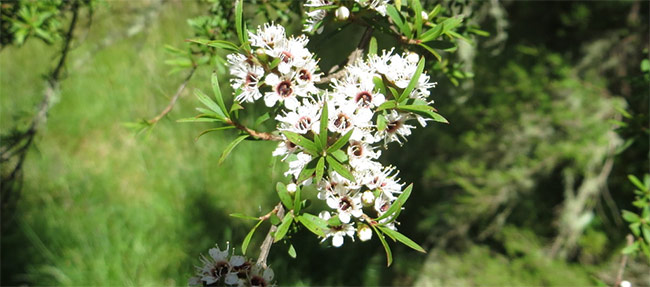
Kanuka (Photo 1243002) by Kathy Warburton. Licensed under CC BY 4.0
Description
Kanuka Essential Oil, is also sometimes known as White Tea Tree Essential Oil. I've used Kanuka Essential Oil occasionally since the late 1990s, but it is still harder to source than is Manuka Essential Oil or Tea Tree Essential Oil.
If the GC/MS reports that I've reviewed are an accurate representation of most steam distilled Kanuka Essential Oils, the oil seems to be somewhat more closely related in composition to Australian Tea Tree Essential Oil than to New Zealand Manuka Essential Oil. However, Kanuka is much higher in monoterpenes than is Australian Tea Tree. It contains about 5% cineole.
Kanuka Essential Oil Benefits and Uses
- Chronic Inflammatory Conditions Including Rheumatoid Arthritis and Fibromyalgia
- Sore Muscles
- Strains
- Back Pain
- Pain Associated with Burns
- Intestinal Complaints
Source: Neryls Purchon and Lora Cantele, Complete Aromatherapy & Essential Oils Handbook for Everyday Wellness (Toronto ON: Robert Rose, 2014), 70.
Botanical Name
Kunzea ericoides / Leptospermum ericoides
Plant Family
Common Method of Extraction
Steam Distilled
Plant Part Typically Used
Color
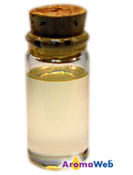
Pale Yellow
Consistency
Thin
Perfumery Note
Middle
Strength of Initial Aroma
Medium
Aromatic Description
Kanuka Essential Oil smells sweet, herbaceous and earthy.
Sustainability and Conservation Status
Near Threatened
Source: https://www.iucnredlist.org/species/246936255/246936287
Last Accessed: February 15, 2026
To learn more about the conservation status of essential oil bearing plants and how to use the IUCN Red List of Threatened Species, please refer to AromaWeb's Guide to Essential Oils and Sustainability.
Major Constituents
- a-Pinene
- Viridifloraol
- 1,8-Cineole
- (+)-Limonene
- p-Cymene
- Calamenene
- Gamma-Terpinene
- a-Selinene
Source: N.G. Porter, A.L. Wilkins. Chemical, Physical and Antimicrobial Properties of Essential Oils of Leptospermum scoparium and Kunzea erocoides. (Phytochemistry 50, 1998), 407-415. Source cited in Robert Tisserand and Rodney Young, Essential Oil Safety (Second Edition. United Kingdom: Churchill Livingstone Elsevier, 2014), 316.
Kanuka Essential Oil Safety Information
Tisserand and Young do not indicate any special precautions when using Kanuka Essential Oil. However, they precaution to avoid use of the oil if it has oxidized. Reading Tisserand and Young's full profile is recommended. [Robert Tisserand and Rodney Young, Essential Oil Safety (Second Edition. United Kingdom: Churchill Livingstone Elsevier, 2014), 316.]
General Safety Information
Do not take any oils internally and do not apply undiluted essential oils, absolutes, CO2s or other concentrated essences onto the skin without advanced essential oil knowledge or consultation from a qualified aromatherapy practitioner. For general dilution information, read AromaWeb's Guide to Diluting Essential Oils. If you are pregnant, epileptic, have liver damage, have cancer, or have any other medical problem, use oils only under the proper guidance of a qualified aromatherapy practitioner. Use extreme caution when using oils with children and be sure to first read the recommended dilution ratios for children. Consult a qualified aromatherapy practitioner before using oils with children, the elderly, if you have medical issues or are taking medications. Before using this or any essential oil, carefully read AromaWeb's Essential Oil Safety Information page. For in-depth information on oil safety issues, read Essential Oil Safety by Robert Tisserand and Rodney Young.
Shelf Life
Important Information About the Profiles
The essential oil information provided on AromaWeb is intended for basic educational purposes only. The references to safety information, test results, constituents and percentages is generalized information. Essential oils can vary greatly in composition. The data is not necessarily complete and is not guaranteed to be accurate. The essential oil photos are intended to represent the typical and approximate color of each essential oil. However, essential oil composition and color can vary based on harvesting, distillation, age of the essential oil and other factors. Profiles for several CO2 Extracts and absolutes are included within the directory, and are denoted as such.