Melissa Essential Oil
Melissa officinalis
Description
Melissa Essential Oil is often adulterated. Purchase only from reputable sources that test their oils.
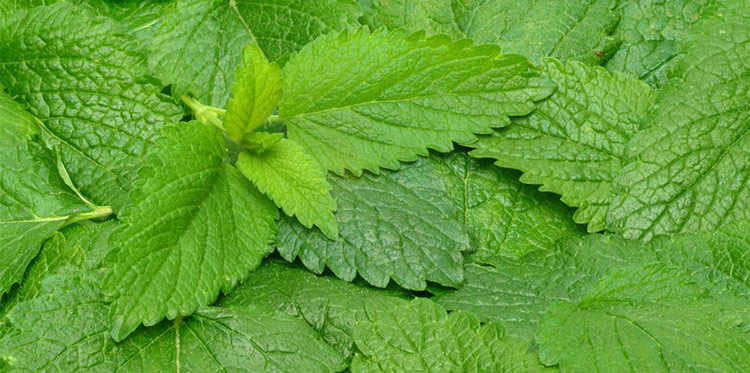
Melissa Essential Oil is steam distilled from the leaves and flowers of Melissa officinalis, an herb most commonly referred to as Lemon Balm and sometimes as Bee Balm. Lemon Balm is easy to find and grow. Although the leaves of Lemon Balm are quite aromatic, the leaves and flowers do not yield much essential oil. Therefore, the oil is often adulterated, and true Melissa Essential Oil commands a very high price.
Aromatically, Melissa Essential Oil possesses a wonderfully fresh, lemony, green and slightly herbaceous character. It's a delightful aroma that many find pleasant.
Melissa Essential Oil is comprised of approximately 60% aldehydes and 10% monoterpenols. Citral (geranial and neral) is the key aldehyde present within the oil and is primarily responsible for the oil's beautiful, lemony aroma. There is also around 10% Citronellal present within the oil. Due to its citral content, Melissa Oil needs to be used with care and shouldn't be used above 0.9% in topical applications. Refer to the Safety Information section below for more safety hazard and contraindication information.
Melissa Essential Oil can be helpful for acne and oily skin. Because the essential oil poses a high risk of skin sentisization, however, Melissa Hydrosol can be a much safer and more affordable alternative. I personally find that Melissa Hydrosol is quite helpful in assisting with my oily skin.
Emotionally, Melissa Essential Oil has been praised for its ability to help soothe anxiety and support those with depression. Robbi Zeck writes that "Melissa softens extreme emotions, eases resentment, gladdens the heart and engages the soul in its own graceful rhythm." [Robbi Zeck, ND, The Blossoming Heart: Aromatherapy for Healing and Transformation (Victoria, Australia: Aroma Tours, 2008), 97.]
After viewing this profile, explore AromaWeb's insightful Lemon-Scented Essential Oil Guide to compare the composition, uses and benefit for over ten different lemon-scented essential oils.
Melissa Essential Oil Benefits and Uses
- Insomnia
- Sleep Disorders
- Indigestion
- Nausea
- Fungal Infections
- Candida
- Viral Skin Infections
- Herpes
- Menopausal Symptoms
- Nervousness
- Stress
- Anxiety-related Symptoms
- Depression
Source: Valerie Ann Worwood, The Complete Book of Essential Oils and Aromatherapy, 25th Anniversary Edition (Novato, CA: New World Library, 2016, 605.
Botanical Name
Plant Family
Common Method of Extraction for Melissa Essential Oil
Steam Distilled
Plant Part Typically Used
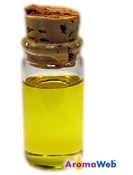
Color
Yellow
Consistency
Thin
Perfumery Note
Top/Middle
Strength of Initial Aroma
Strong
Aromatic Description
Melissa Essential Oil smells fresh, lemony and herbaceous.
Sustainability and Conservation Status
Least Concern
Source: https://www.iucnredlist.org/species/203248/2762574
The scope of the IUCN assessment was limited to Europe.
Last Accessed: February 15, 2026
To learn more about the conservation status of essential oil bearing plants and how to use the IUCN Red List of Threatened Species, please refer to AromaWeb's Guide to Essential Oils and Sustainability.
Major Constituents of Melissa Essential Oil
- Geranial
- Neral
- 6-methyl-5-hepten-2-one
- B-Caryophyllene
- Citronellal
- Geranyl Acetate
- Aesculetine
Source: E. Joy Bowles, The Chemistry of Aromatherapeutic Oils (NSW, Australia: Allen & Unwin, 2003), 196.
Melissa Essential Oil Safety Information
Tisserand and Young precaution that Melissa Essential Oil can pose a drug interaction hazard and that there is a risk of teratogenicity. They precaution against topical use in children and infants under age 2 and for those with hypersensitive/diseased/damaged skin. They recommend a dermal maximum of 0.9%. Reading Tisserand and Young's full profile is recommended. [Robert Tisserand and Rodney Young, Essential Oil Safety (Second Edition. United Kingdom: Churchill Livingstone Elsevier, 2014), 350-351.]
This essential oil poses a higher risk of causing irritation and sensitization when used in the bath. Avoid using it in the bath, even if it is solubilized/diluted.
Detailed Guide to Lemon-Scented Essential Oils
Not all lemon-scented essential oils are derived from citrus fruits. Instead, they are a diverse group of essential oils that share a refreshing, lemony aroma.
Explore AromaWeb's insightful Lemon-Scented Essential Oil Guide and learn about their composition, uses, benefits, how they differ, safety considerations and more.
General Safety Information
Do not take any oils internally and do not apply undiluted essential oils, absolutes, CO2s or other concentrated essences onto the skin without advanced essential oil knowledge or consultation from a qualified aromatherapy practitioner. For general dilution information, read AromaWeb's Guide to Diluting Essential Oils. If you are pregnant, epileptic, have liver damage, have cancer, or have any other medical problem, use oils only under the proper guidance of a qualified aromatherapy practitioner. Use extreme caution when using oils with children and be sure to first read the recommended dilution ratios for children. Consult a qualified aromatherapy practitioner before using oils with children, the elderly, if you have medical issues or are taking medications. Before using this or any essential oil, carefully read AromaWeb's Essential Oil Safety Information page. For in-depth information on oil safety issues, read Essential Oil Safety by Robert Tisserand and Rodney Young.
Shelf Life
Important Information About the Profiles
The essential oil information provided on AromaWeb is intended for basic educational purposes only. The references to safety information, test results, constituents and percentages is generalized information. Essential oils can vary greatly in composition. The data is not necessarily complete and is not guaranteed to be accurate. The essential oil photos are intended to represent the typical and approximate color of each essential oil. However, essential oil composition and color can vary based on harvesting, distillation, age of the essential oil and other factors. Profiles for several CO2 Extracts and absolutes are included within the directory, and are denoted as such.