Lemon-Scented Essential Oils Explained: Your Practical Guide to Their Similarities, Differences and Uses

Table of Contents:
- Introduction
- What Are Lemon-Scented Essential Oils?
- What Makes Lemon Essential Oil Smell Lemony?
- Why Cold Pressed and Steam Distilled Lemon Essential Oils Smell Different
- What is Limonene?
- Understanding Citral: An Important Lemon-Scented Constituent
- Citronellal: A Lemon-Scented Aldehyde
- Lemon-Scented Essential Oil Constituent Comparison Chart
- List of Most Commonly Available Lemon-Scented Essential Oils
- Lemon, Cold Pressed
- Lemon, Steam Distilled
- Lemon, 5 Fold
- Lemon-Scented Ironbark
- Lemon Eucalyptus
- Lemon Myrtle
- Lemon Petitgrain
- Lemon Tea Tree
- Lemon Verbena
- Lemongrass, East Indian
- Lemongrass, West Indian (Xiang Mao)
- May Chang
- Melissa (Lemon Balm)
- Conservation Status
- Why are Citronella and Palmarosa Essential Oils Not Included?
- How to Use Lemon-Scented Essential Oils
- About the Data Mentioned in this Guide
- References
- Recommended Reading
Introduction

Cold pressed Lemon Essential Oil is well known and widely used, but it's far from the only lemon-scented oil available. More than a dozen other essential oils share a bright, lemony aroma while offering their own unique benefits. Among them are Lemon Myrtle, Lemongrass, Lemon Eucalyptus and May Chang, each offering a distinctive aromatic profile and therapeutic applications.
Lemon-scented essential oils uplift the spirit with an aroma that conveys freshness, energy, and clarity.
Whether naturally high in limonene or rich in other lemony constituents (explained below), these oils provide more than a pleasant fragrance.
They can help promote a positive mood, support household cleaning and provide natural deodorizing benefits, making them useful for both wellness and daily routines.
This guide highlights a wide range of lemon-scented essential oils, exploring their aromatic nuances, key constituents and general applications. It will help you discover the best oils for your needs.
You'll also find links to AromaWeb's detailed profiles for each lemon-scented essential oil.
What Are Lemon-Scented Essential Oils?
Lemon-scented essential oils are a diverse group of essential oils that share a refreshing, lemony aroma.
Produced from many different plants, they contain compounds like citral, limonene and citronellal that create their bright, lemony aroma.
While Lemon Essential Oil is typically cold pressed from the rinds of lemons, other lemon-scented oils are typically steam distilled from the leaves or grass of the plant.
Examples include Lemongrass, Lemon Eucalyptus, Lemon Tea Tree, May Chang (Litsea Cubeba), and Melissa (Lemon Balm) essential oils. These oils differ significantly in their botanical origin, chemical composition, therapeutic properties, and safety considerations, but they are often grouped together because of their similar scent profiles.
It's important to distinguish between these oils not only by aroma but also by their individual therapeutic benefits and safety considerations. Their uses in aromatherapy, perfumery, and formulation can vary.
What Makes Lemon Essential Oil Smell Lemony?

The signature bright, zesty aroma of Lemon Essential Oil (Citrus limon) is primarily due to its high limonene content, which can comprise 65–75% of the oil.
In addition to limonene, trace components such as B-pinene and Gamma-terpinene add fresh, sharp, and slightly green undertones that round out the overall lemony aroma.
Why Cold Pressed and Steam Distilled Lemon Essential Oils Smell Different
Lemon essential oil can be produced using two primary methods: cold pressing and steam distillation. While both yield an aromatic oil from the same botanical source (Citrus limon), their scent profiles differ due to the extraction method and resulting chemistry.
Cold Pressed Lemon Essential Oil
Cold pressing mechanically expresses the oil from the peel without the addition of heat or water.
This method captures the highest proportion of the naturally occurring aromatic molecules.
The result is a fresh, bright, zesty aroma that more closely mirrors the scent of a freshly peeled lemon.
Steam Distilled Lemon Essential Oil
Steam distillation is not able to capture the heavier aromatic molecules that cold pressing is able to capture.
Steam distilled Lemon Essential Oil tends to have a softer, sweeter, and less sharply "zesty" scent than cold pressed lemon oil.
Key Takeaway About Cold Pressed vs. Steam Distilled Lemon Essential Oil
Aromatically, cold pressed lemon oil is often preferred for its more vibrant aroma, while steam distilled lemon oil offers a gentler scent that is free of the phototoxic furanocoumarins present in cold pressed lemon oil.
What is Limonene?
Limonene is a naturally occurring monoterpene. It is abundant in the peels of citrus fruits, especially lemons, oranges, and limes.
It is one of the most common and widely recognized aromatic compounds in the plant world and is present in many essential oils.
It is most commonly associated with citrus essential oils, and it plays a major role in giving citrus essential oils their fresh, sweet, and juicy aroma.

There are two isomers of limonene:
- D-limonene: It has a sweet, orange-like aroma and is the dominant form found in most citrus oils, including Lemon, Sweet Orange, and Grapefruit essential oils.1,2
- L-limonene: It has a more pine-like scent and is less common in aromatherapy.1,2
D-limonene can make up 50–70% of Lemon Essential Oil, making it the primary contributor to the familiar aroma of Lemon Oil.
Limonene is also known for its solvent, antioxidant, and mild antibacterial properties, and is often used in cleaning products and natural degreasers.
Limonene can oxidize over time, especially when exposed to air and light, which increases the risk of skin sensitization.3
For this reason, it's especially important to store citrus essential oils properly.
Understanding Citral: An Important Lemon-Scented Constituent
Citral is a naturally occurring aldehyde found in several essential oils, most notably those with a bright, lemony aroma.
Citral is not a single molecule but is actually a mixture of two geometric isomers: geranial (citral a) and neral (citral b).4

The composition of citral equals the total amount of geranial and neral present in an essential oil.
If you review GC-MS or GC-FID reports, you will typically see geranial and neral shown separately on the report.
Together, geranial and neral create a sharp, intense, lemony aroma.
Beyond its fragrant appeal, citral is an aldehyde that is valued for its antimicrobial, antifungal, and anti-inflammatory properties.
However, it is also recognized as a potential skin sensitizer, especially when used in higher concentrations or in oxidized form. For this reason, essential oils high in citral should be used with proper dilution and great care in topical formulations.5
What Essential Oils Contain Citral?
Citral is present in high concentrations in essential oils such as Lemongrass, May Chang and Melissa. It is also found in smaller amounts in Lemon Myrtle, Lemon Tea Tree, and other lemony essential oils that are listed in more detail below.
Citronellal: A Lemon-Scented Aldehyde
Citronellal is a naturally occurring aldehyde found in several essential oils that exhibit lemon-like or citronella-like aromas.

It offers a sharp, fresh, lemony scent with soft green undertones, making it distinct from the sweeter, fruitier aroma of limonene or the sharp zestiness of citral.
Citronellal is a key component in Lemon Eucalyptus and Citronella essential oils. It can also be found in smaller amounts in other essential oils.
In aromatherapy, citronellal is valued for its antimicrobial, antioxidant and anti-inflammatory action.6
Because it's an aldehyde, citronellal can be more chemically reactive than some other components. It may also contribute to skin sensitization in topical products, especially when oxidized or used in high concentrations, so proper dilution is essential.7
Lemon-Scented Essential Oil Constituent Comparison Chart
Use this table to compare key lemon-scented constituents across common lemon-scented essential oils. Actual composition varies by lot and source, so verify with your supplier's GC–MS or GC-FID report.
| Essential Oil Name | Botanical Name | Limonene* | Citral* | Citronellal* |
| Lemon, Cold Pressed | Citrus limon | 52 - 70% | 2 - 5% | < 0.5% |
| Lemon, Steam Distilled | Citrus limon | 65 - 70% | 0.5 - 2% | < 0.5% |
| Eucalyptus Ironbark (Lemon Ironbark) | Eucalyptus staigeriana | 5 - 23% | 20 - 31% | < 1% |
| Lemon Eucalyptus | Corymbia citriodora (Synonym: Eucalyptus citriodora) | < 0.5% | < 0.5% | 53 - 57% |
| Lemon Myrtle | Backhousia citriodora | < 0.5% | 88 - 91% | < 0.5% |
| Lemon Petitgrain | Citrus limon (from leaves not peel) | 40 - 50% | 8 - 12% | < 1% |
| Lemon Tea Tree | Leptospermum petersonii | < 1% | 50 - 55% | 15 - 30% |
| Lemon Verbena | Aloysia citrodora (Synonym: Lippia citrodora) | 20 - 23% | 18 - 24% | < 1% |
| Lemongrass | Cymbopogon flexuosus | < 2% | 65 - 70% | < 0.5% |
| Lemongrass - Xiang Mao | Cymbopogon citratus | 1 - 13% | 60 - 65% | < 0.5% |
| May Chang | Litsea cubeba | 10 - 14% | 66-70% | < 2% |
| Melissa (Lemon Balm) | Melissa officinalis | < 1% | 36 - 42% | 3 - 5% |
* The data ranges shown above are based on my personal notes from various GC-MS and GC-FID reports over the years. They are intended for general reference only. Always consult the GC-MS or GC-FID report for the specific essential oil(s) you are using to verify their exact composition.
List of Most Commonly Available Lemon-Scented Essential Oils
Click the links to view each essential oil's detailed profile.

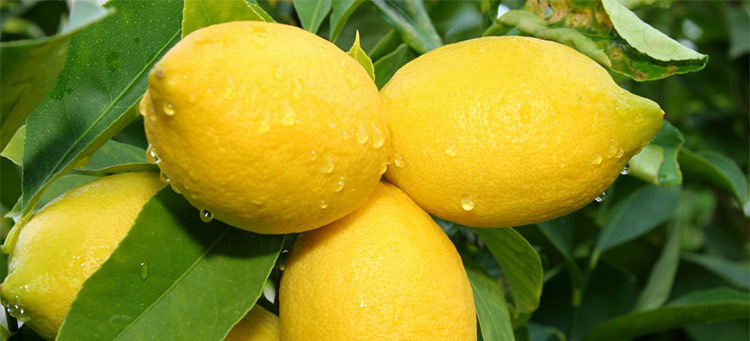
Lemon, Cold Pressed
Botanical Name: Citrus limon
Plant Family: Rutaceae
Plant Part(s) Typically Used for Essential Oil: Citrus Rind (Peel)
Aromatic Description: Fresh, bright, zesty aroma that more closely mirrors the scent of a freshly peeled lemon than that of steam distilled Lemon Essential Oil.
General Uses: See AromaWeb's Lemon Essential Oil Profile for details.
Key Constituents: Limonene, B-Pinene, Gamma-Terpinene, a-Terpineol, a-Pinene, Citral8
Typical Ranges of Lemon-Scented Constituents:*
- Limonene: 52 - 70%
- Citral: 2 - 5%
- Citronellal: < 0.5%
Method of Production: Cold Pressed
Conservation Status:** Not Classified by IUCN
Notes: Cold pressed Lemon Essential Oil is phototoxic. Tisserand recommends a dermal maximum of 2.0% for the cold pressed oil to avoid the risk of a phototoxic reaction. He also recommends avoiding the topical use of Lemon Oil, regardless of method of distillation, if it has oxidized.25, 26 Reading Robert Tisserand's full profile in the current edition of Essential Oil Safety is recommended.
View AromaWeb's Lemon Essential Oil Profile to Learn More
Lemon, Steam Distilled
Botanical Name: Citrus limon
Plant Family: Rutaceae
Plant Part(s) Typically Used for Essential Oil: Citrus Rind (Peel)
Aromatic Description: Steam distilled Lemon Essential Oil tends to have a softer, sweeter, and less sharply "zesty" scent than cold pressed lemon oil.
General Uses: See AromaWeb's Lemon Essential Oil Profile for details.
Key Constituents: Limonene, B-Pinene, Gamma-Terpinene, Citral, a-Pinene, Sabinene9
Typical Ranges of Lemon-Scented Constituents:*
- Limonene: 65 - 70%
- Citral: 0.5 - 2%
- Citronellal: < 0.5%
Method of Production: Steam Distilled
Conservation Status:** Not Classified by IUCN
Notes: Steam-distilled lemon is not phototoxic; follow general dilution guidance and avoid oxidized oil. Tisserand recommends avoiding the topical use of Lemon Oil, regardless of method of distillation, if it has oxidized. Reading Robert Tisserand's full profile in the current edition of Essential Oil Safety is recommended.
View AromaWeb's Lemon Essential Oil Profile to Learn More

Lemon, 5 Fold
Botanical Name: Citrus limon
Plant Family: Rutaceae
Plant Part(s) Typically Used for Essential Oil: Citrus Rind (Peel)
Aromatic Description: Rich, concentrated lemon aroma that is intensely bright, sweet, and zesty, with fewer terpenic notes than standard cold pressed lemon oil.
General Uses: See Folded Citrus Essential Oils Explained for details on folded citrus oils.
Key Constituents: Folded essential oils are not widely used for holistic aromatherapy or wellness applications. Therefore, I have not been able to procure reliable GC/MS reports for folded Lemon Essential Oil. I inquired with Alexis St-Gelais, the Scientific Director for Laboratoire PhytoChemia and he mentioned that he did not recall ever receiving a sample of 5-fold Lemon Essential Oil for testing.10
Method of Production: Cold pressed then distilled or fractionated. Check with the supplier to confirm the specific method of production for the oil you are considering purchasing.
Conservation Status:** Not Classified by IUCN
Notes: Cold pressed Lemon Essential Oil is phototoxic. 5-fold lemon essential oil is phototoxic because the redistillation process used to make folded oils does not remove all of the furanocoumarins responsible for phototoxicity. Unless you have GC/MS data confirming non-detectable levels of phototoxic furanocoumarins, treat 5-fold lemon oil with the same phototoxic precautions as cold pressed lemon oil. Tisserand recommends a dermal maximum of 2.0% for the cold pressed oil to avoid the risk of a phototoxic reaction. He also recommends avoiding the topical use of Lemon Oil, regardless of method of distillation, if it has oxidized. Reading Robert Tisserand's full profile in the current edition of Essential Oil Safety is recommended.
View Folded Citrus Essential Oils Explained to Learn More

Lemon-Scented Ironbark
Botanical Name: Eucalyptus staigeriana
Plant Family: Myrtaceae
Plant Part(s) Typically Used for Essential Oil: Leaves
Aromatic Description: Sweet, fruity-lemon with floral undertones. Compared to lemon or lemongrass, it is softer and more rounded, with a delicate herbaceous lift. It does not offer the cineole and camphorous aroma that Eucalyptus globulus Essential Oil is known for.
General Uses: See AromaWeb's Lemon-Scented Ironbark Essential Oil Profile for details.
Key Constituents: Methyl geranate, Geranyl acetate, beta-Phellandrene, Limonene, Neral, Geraniol11
Typical Ranges of Lemon-Scented Ironbark Constituents:*
- Limonene: 5 - 23%
- Citral: 20 - 31%
- Citronellal: < 1%
Method of Production: Steam Distilled
Conservation Status:** Least Concern
Notes: Deby Atterby recommends a maximum dermal level of no higher than 1% and expresses precautions in using it on sensitive skin due to its aldehyde content, including citral. Use great care with children, and do not use at all with children under the age of 3. Reading her complete profile is recommended. [Source: Deby Atterby, Australian Essential Oil Profiles (Australia: AAT Publishing, 2021), 105.]
View AromaWeb's Lemon-Scented Ironbark Essential Oil Profile to Learn More
Lemon Eucalyptus
Botanical Name: Corymbia citriodora (Synonym: Eucalyptus citriodora)
Plant Family: Myrtaceae
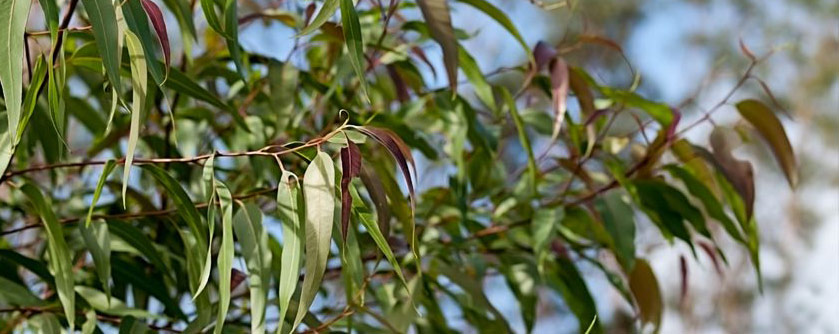
Plant Part(s) Typically Used for Essential Oil: Leaves
Aromatic Description: Bold, sharp lemon fragrance with a penetrating, slightly medicinal edge due to its high citronellal content.
General Uses: See AromaWeb's Lemon Eucalyptus Essential Oil Profile for details.
Key Constituents: Citronellal, Citronellol, Isopulegol12, 13
Typical Ranges of Lemon-Scented Constituents:*
- Limonene: < 0.5%
- Citral: < 0.5%
- Citronellal: 53 - 57%
Method of Production: Steam Distilled
Conservation Status:** Least Concern
Notes: Reading Robert Tisserand's full profile in the current edition of Essential Oil Safety is recommended.
View AromaWeb's Lemon Eucalyptus Essential Oil Profile to Learn More
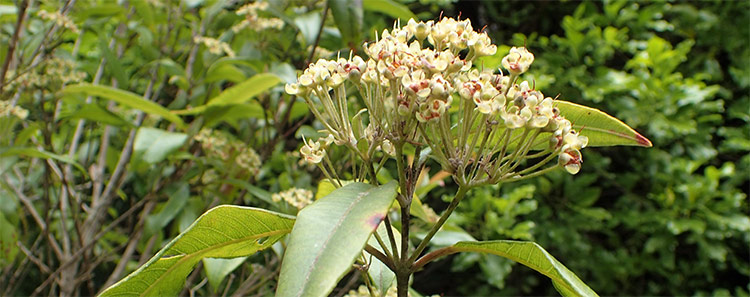
Photo Credit: Backhousia citriodora kz02.jpg by Krzysztof Ziarnek, Kenraiz. Cropped image.
Licensed under CC BY-SA 4.0
Lemon Myrtle
Botanical Name: Backhousia citriodora
Plant Family: Myrtaceae
Plant Part(s) Typically Used for Essential Oil: Leaves
Aromatic Description: One of the most powerful lemon-scented oils. Potent, crisp, and intensely fresh. It is brighter and more vibrant than lemongrass, with a sweetness that makes it smell almost like lemon candy. A little goes a long way.
General Uses: See AromaWeb's Lemon Myrtle Essential Oil Profile for details.
Key Constituents: Geranial, Neral, Isogeranial, Isoneral, 6-Methyl-5-hepten-2-one, Linalool14
Typical Ranges of Lemon-Scented Constituents:*
- Limonene: < 0.5%
- Citral: 88 - 91%
- Citronellal: < 0.5%
Method of Production: Steam Distilled
Conservation Status:** Not Classified by IUCN
Notes: Reading Robert Tisserand's full profile in the current edition of Essential Oil Safety is recommended.
View AromaWeb's Lemon Myrtle Essential Oil Profile to Learn More
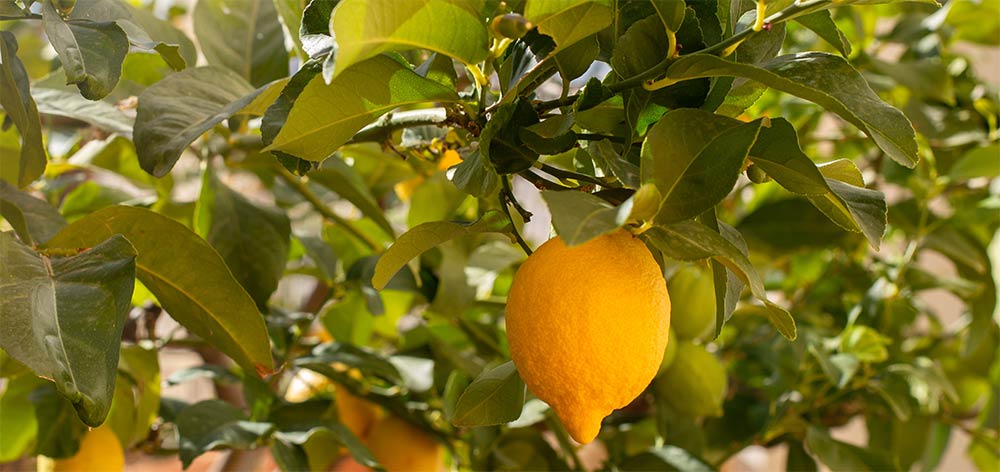
Lemon Petitgrain
Botanical Name: Citrus limon
Plant Family: Rutaceae
Plant Part(s) Typically Used for Essential Oil: Leaves and Twigs
Aromatic Description: A green, leafy lemon aroma. It smells less like juicy citrus and is more herbaceous. Imagine a lemon zest mixed with the aroma of green leaves: fresh but with a slightly woody, twig-like nuance that sets it apart from lemon oils derived from lemon rinds.
General Uses: See AromaWeb's Lemon Petitgrain Essential Oil Profile for details.
Key Constituents: Geranial, (+)-Limonene, Neral, Geraniol, B-Pinene, Neryl acetate, Nerol, a-Terpinyl acetate, Linalyl acetate, Geranyl acetate, Citronellal15
Typical Ranges of Lemon-Scented Constituents:*
- Limonene: 40 - 50%
- Citral: 8 - 12%
- Citronellal: < 1%
Method of Production: Steam Distilled
Conservation Status:** Not Classified by IUCN
Notes: Reading Robert Tisserand's full profile in the current edition of Essential Oil Safety is recommended.
View AromaWeb's Lemon Petitgrain Essential Oil Profile to Learn More
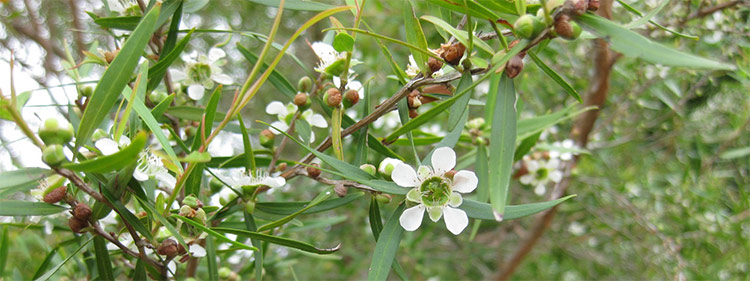 Photo Credit: Gardenology.org IMG 2706 rbgs11jan.jpg by Raffi Kojian. Cropped image. Licensed under CC BY-SA 3.0
Lemon Tea Tree
Botanical Name: Leptospermum petersonii
Plant Family: Myrtaceae
Plant Part(s) Typically Used for Essential Oil: Leaves
Aromatic Description: Strong, sweet, and distinctly lemony, but heavier and perhaps less airy than true lemon oils. It carries a deeper, more resinous character. It is lemony with tea tree's earthy strength.
General Uses: See AromaWeb's Lemon Tea Tree Essential Oil Profile for details.
Key Constituents: Geranial, Neral, a-Pinene, Citronellal, Geraniol, Isopulegol, Linalool, Spathulenol16
Typical Ranges of Lemon-Scented Constituents:*
- Limonene: < 1%
- Citral: 50 - 55%
- Citronellal: 15 - 30%
Method of Production: Steam Distilled
Conservation Status:** Least Concern
Notes: Reading Robert Tisserand's full profile in the current edition of Essential Oil Safety is recommended.
View AromaWeb's Lemon Tea Tree Essential Oil Profile to Learn More
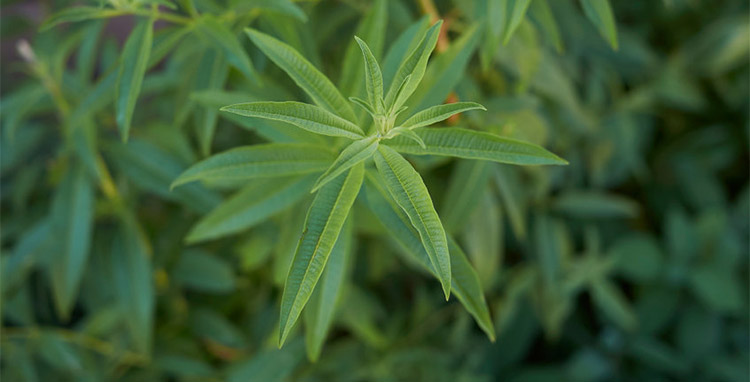
Lemon Verbena
Botanical Name: Aloysia citrodora (Synonym: Lippia citrodora)
Plant Family: Verbenaceae
Plant Part(s) Typically Used for Essential Oil: Leaves
Aromatic Description: Luminous, sweet-lemon fragrance with soft floral and herbal nuances. It is sweeter and more elegant than lemon balm, less sharp than lemon myrtle.
General Uses: See AromaWeb's Lemon Verbena Essential Oil Profile for details.
Key Constituents: Geranial, Neral, (+)-Limonene, Zingiberene, Germacrene D, Sabinene17
Typical Ranges of Lemon-Scented Constituents:*
- Limonene: 20 - 23%
- Citral: 18 - 24%
- Citronellal: < 1%
Method of Production: Steam Distilled
Conservation Status:** Not Classified by IUCN
Notes: Tisserand and Young recommend a dermal maximum of 0.9% to avoid the risk of a phototoxic reaction. If using more than 0.9%, the skin should not be exposed to sunlight or UV light for at least 18 hours. 18 Reading Robert Tisserand's full profile in the current edition of Essential Oil Safety is recommended.
View AromaWeb's Lemon Verbena Essential Oil Profile to Learn More

Lemongrass, East Indian
Botanical Name: Cymbopogon flexuosus (Synonym: Andropogon flexuosus)
Plant Family: Poaceae
Plant Part(s) Typically Used for Essential Oil: Grass
Aromatic Description: Strong, bold lemon aroma with grassy and slightly earthy undertones. Sharper and less sweet than lemon myrtle, with a grounding quality.
General Uses: See AromaWeb's Lemongrass Essential Oil Profile for details.
Key Constituents: Geranial, Neral, Geranyl Acetate, Geraniol, (+)-Limonene19
Typical Ranges of Lemon-Scented Constituents:*
- Limonene: < 2%
- Citral: 65 - 70%
- Citronellal: < 0.5%
Method of Production: Steam Distilled
Conservation Status:** Not Classified by IUCN
Notes: Reading Robert Tisserand's full profile in the current edition of Essential Oil Safety is recommended.
View AromaWeb's Lemongrass Essential Oil Profile to Learn More

Lemongrass, West Indian (Xiang Mao)
Botanical Name: Cymbopogon citratus (Synonym: Andropogon citratus)
Plant Family: Poaceae
Plant Part(s) Typically Used for Essential Oil: Grass
Aromatic Description: Similar to lemongrass (C. flexuosus), but typically softer, smoother, and slightly sweeter. It retains the grassy-lemon profile but is less pungent, with a gentler citrus freshness.
General Uses: See AromaWeb's Lemongrass Essential Oil Profile for details.
Key Constituents: Geranial, Neral, B-Myrcene, Geraniol, Limonene oxide20
Typical Ranges of Lemon-Scented Constituents:*
- Limonene: 1 - 13%
- Citral: 60 - 65%
- Citronellal: < 0.5%
Method of Production: Steam Distilled
Conservation Status:** Not Classified by IUCN
Notes: Reading Robert Tisserand's full profile in the current edition of Essential Oil Safety is recommended.
View AromaWeb's Lemongrass Essential Oil Profile to Learn More
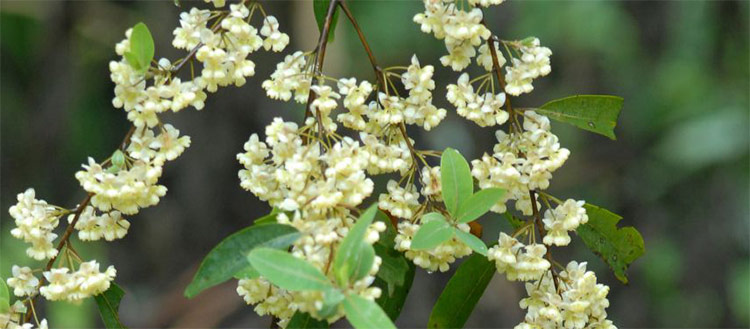 "Litsea cubeba" by LiChieh Pan. Licensed under CC BY 2.0
May Chang
Botanical Name: Litsea cubeba
Plant Family: Lauraceae
Plant Part(s) Typically Used for Essential Oil: Fruit
Aromatic Description: Sweet, fruity-lemon aroma with a touch of spiciness. Sometimes compared to lemon verbena or lemongrass, but rounder, softer, and more "lemon-candy" in character.
General Uses: See AromaWeb's May Chang Essential Oil Profile for details.
Key Constituents: Geranial, Neral, (+)-Limonene, Methyl Heptenone, B-Myrcene, Linalool, Geraniol, Sabinene, Linalyl Acetate, a-Pinene, B-Pinene, Nerol21
Typical Ranges of Lemon-Scented Constituents:*
- Limonene: 10 - 14%
- Citral: 66-70%
- Citronellal: < 2%
Method of Production: Steam Distilled
Conservation Status:** Least Concern
Notes: Reading Robert Tisserand's full profile in the current edition of Essential Oil Safety is recommended.
View AromaWeb's May Chang Essential Oil Profile to Learn More
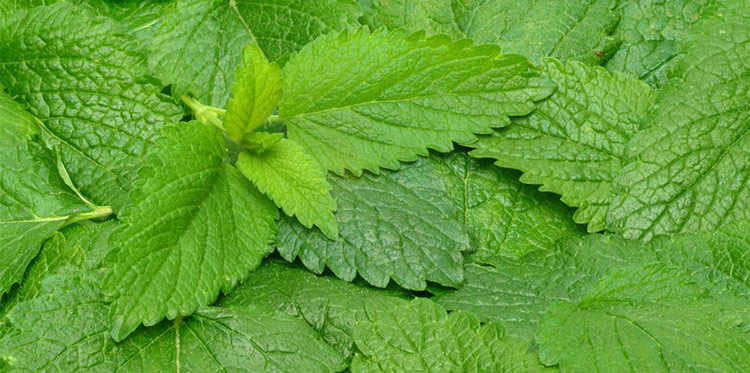
Melissa (Lemon Balm)
Botanical Name: Melissa officinalis
Plant Family: Lamiaceae
Plant Part(s) Typically Used for Essential Oil: Leaves and Flowers/Buds
Aromatic Description: A refined, complex lemon scent with fresh green and herbaceous undertones. Less sharp than lemon oils, more delicate and nuanced. It smells lemony with a gentle garden-herb softness.
General Uses: See AromaWeb's Melissa Essential Oil Profile for details.
Key Constituents: Geranial, Neral, 6-methyl-5-hepten-2-one, B-Caryophyllene, Citronellal, Geranyl Acetate22
Typical Ranges of Lemon-Scented Constituents:*
- Limonene: < 1%
- Citral: 36 - 42%
- Citronellal: 3 - 5%
Method of Production: Steam Distilled
Conservation Status:** Least Concern
Notes: Reading Robert Tisserand's full profile in the current edition of Essential Oil Safety is recommended.
View AromaWeb's Melissa Essential Oil Profile to Learn More
* The data ranges shown above are based on my personal notes from various GC-MS and GC-FID reports over the years. They are intended for general reference only. Always consult the GC-MS or GC-FID report for the specific essential oil(s) you are using to verify their exact composition.
**Conservation Status
It's so important that we are each mindful of the conservation status of the trees and plants that are used in the distillation of the oils that we purchase and work with. The conservation status information that appears in this guide and that you see included on most of AromaWeb's essential oil profiles comes from the IUCN Red List of Threatened Species. IUCN stands for the International Union for Conservation of Nature. To learn more about the conservation status of essential oil bearing plants and how to use the IUCN Red List of Threatened Species, please refer to AromaWeb's Guide to Essential Oils and Sustainability.
Why are Citronella and Palmarosa Essential Oils Not Included?

Citronella Essential Oil
Although the constituent citronellal does contribute a lemon-like top note, the aroma of Citronella Essential Oil is not purely lemon-like. It generally is perceived as being more herbaceous, grassy and insect-repellent smelling than being lemon-like.
Citronella is often associated with camping candles and bug sprays, which can confuse scent expectations if you are looking for a pleasant lemon aroma.
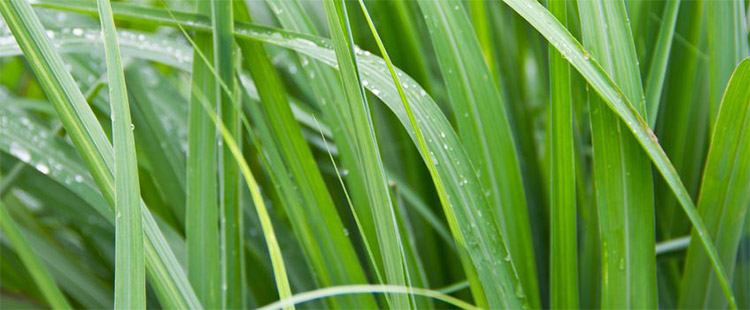
Palmarosa Essential Oil
Although Palmarosa Essential Oil smells lemony to some people, its primary aroma is often described as sweet, floral, and rosy with grassy undertones.
The perceived lemony scent comes from its high content of geraniol, a chemical compound that has a fresh, citrusy character.
Palmarosa Essential Oil is primarily valued for its rose-like scent, and its lemony quality is usually more subtle compared to essential oils like lemon or lemongrass.
How to Use Lemon-Scented Essential Oils
Lemon-scented essential oils can bring a fresh, uplifting aroma to your wellness and home care routines.
While each oil has its own unique properties and precautions, some can be used for emotional support, natural cleaning, skincare and to make your home smell fresh.
Below are some common and effective uses for lemon-scented essential oils.
Be sure to read the full essential oil profile for specific uses for each oil and pay close attention to the safety precautions for each essential oil you plan to use. Referring to Essential Oil Safety Edition 2 is also recommended.
Diffusion
Add lemon-scented oil like Lemongrass, May Chang, or Lemon Eucalyptus to an essential oil diffuser to create a bright, cleansing, and invigorating atmosphere.
Refer to your diffuser model's usage instructions for details on how many drops of essential oil to use. Also refer to AromaWeb's Diffuser Safety Tips.
Lemon-scented essential oils are often diffused for the following benefits:
- Support general wellbeing
- Uplift mood and reduce feelings of fatigue
- Freshen indoor air
- Promote mental clarity
Topical Application
Some lemon-scented oils can be applied to the skin if properly diluted in a carrier oil.
Extreme caution must be used because many lemon-scented oils are rich in citral or aldehydes, which may cause skin irritation or sensitization.
For example, Lemongrass and Melissa may help support oily and blemish-prone skin. Lemongrass Essential Oil must be used under 0.7% and Melissa Essential Oil must be used under 0.9% dilution to reduce the risk of irritation and sensitization.23, 24 Please notice the decimal points in these percentages - the percentage for each is well under 1%.
It is advised not to use lemon-scented essential oils on sensitive or damaged skin. Also avoid use of lemon-scented essential oils in a bath, even if solubilized/diluted.
Phototoxicity
Cold pressed Lemon Essential Oil is phototoxic and Lemon Verbena Essential Oil may be phototoxic.
For cold pressed Lemon Essential Oil, Tisserand and Young recommend a dermal maximum of 2.0% to avoid the risk of a phototoxic reaction.25 If using more than 2%, the skin should not be exposed to sunlight or UV light for at least 18 hours. Steam distilled Lemon Oil is not phototoxic.26, 27
For Lemon Verbena Essential Oil, Tisserand and Young recommend a dermal maximum of 0.9% to avoid the risk of a phototoxic reaction. If using more than 0.9%, the skin should not be exposed to sunlight or UV light for at least 18 hours. 28
Natural Household Cleaning
Oils like Lemon, Lemongrass, and May Chang have antimicrobial and deodorizing properties, making them ideal for inclusion in cleaning sprays and surface cleaners.
Do Not Ingest Essential Oils
Do not add essential oils to your drinking water. Do not ingest essential oils unless you are under the guidance of a qualified aromatherapist or have yourself received appropriate training.
About the Data Mentioned in this Guide
This guide presents data ranges based on the ISO standards available to me at the time, as well as GC-MS reports that I have personally assessed.
While this information can be used as a helpful reference for lemon-scented essential oils that you are considering purchasing or using, it's important to note that not all essential oil constituents will fall precisely within these ranges.
Essential oil composition can vary significantly due to numerous factors affecting the botanical material, including altitude, climate, rainfall, soil conditions, geographic location, the material of the still, distillation length and the expertise and strategies of the distiller.
Additionally, variations may arise due to seasonal shifts, harvesting techniques and post-distillation handling.
As a result, while this guide serves as a helpful reference, it is always advisable to review lot specific GC-MS / GC-FID reports from your specific supplier to understand the unique composition of the essential oil you are purchasing.
References
1 Sue Clarke, Essential Chemistry for Aromatherapy, Second Edition (London: Churchill Livingstone Elsevier, 2008), 35.
2 Dr. rer. nat. Kurt Schnaubelt, Part 1 Chemistry of Essential Oils, PIA Masters Series (San Rafael, CA: Terra Linda Scent and Image, 2001), 94.
3 Robert Tisserand and Rodney Young, Essential Oil Safety (Second Edition. United Kingdom: Churchill Livingstone Elsevier, 2014), 584.
4 Sue Clarke, Essential Chemistry for Aromatherapy, Second Edition, 64-65.
5 Ibid., 64-65.
6 Jennifer Peace Rhind, Essential Oils Fully Revised and Updated 3rd Edition London: Jessica Kingsley Publishers), 2019, Kindle Location: 5515.
7 Sue Clarke, Essential Chemistry for Aromatherapy, Second Edition, 63-65.
8 B.M. Lawrence, Essential Oils 1988-1991 (Wheaton: Allured Publishing, 1993), 61-69. B.M. Lawrence, Essential Oils 1988-1991 (Wheaton: Allured Publishing, 1995), 1-4, 158-162. B.M. Lawrence, Progress in Essential Oils. (Perfumer & Flavorist 21 no. 1, 1996), 41-45. B.M. Lawrence, Progress in Essential Oils. (Perfumer & Flavorist 27 no. 2, 2002), 62-88. Sources cited in Robert Tisserand and Rodney Young, Essential Oil Safety (Second Edition. United Kingdom: Churchill Livingstone Elsevier, 2014), 331-332.
9 B.M. Lawrence, Essential Oils 1988-1991 (Wheaton: Allured Publishing, 1993), 62. Source cited in Robert Tisserand and Rodney Young, Essential Oil Safety (Second Edition. United Kingdom: Churchill Livingstone Elsevier, 2014), 330-331.
10 Private Communication: Alexis St-Gelais, Ph. D., chimiste, Directeur scientifique, Laboratoire PhytoChemia, 2025.
11 Mark A. Webb, Bush Sense: Australian Essential Oils and Aromatic Compounds. (Australia: Griffin Press, 2000), 58.
12 Ibid., 38.
13 Private Communication: Condon, 2003. Source cited in Robert Tisserand and Rodney Young, Essential Oil Safety (Second Edition. United Kingdom: Churchill Livingstone Elsevier, 2014), 335.
14 I.A. Southwell, M. Russell, R.L. Smith, et. al. Backhousia citriodora F. Muell. (Myrtaceae), a Superior Source of Citral. (Journal of Essential Oil Research 12, 2000), 735-741. Source cited in Robert Tisserand and Rodney Young, Essential Oil Safety (Second Edition. United Kingdom: Churchill Livingstone Elsevier, 2014), 360.
15 B.M. Lawrence, Progress in Essential Oils (Perfumer & Flavorist 20, No. 1, 1995), 114-117. Source cited in Robert Tisserand and Rodney Young, Essential Oil Safety (Second Edition. United Kingdom: Churchill Livingstone Elsevier, 2014), 333.
16 J.J. Brophy, R.J. Goldsack, A. Punruckvong, et al. Leaf Essential Oils of the Genus Leptospermum (Myrtaceae) in Eastern Australia. Part 7. Leptospermum petersonii, L. liversidgei and Allies. (Flavour & Fragrance Journal 15, 2000), 342-351. Source cited in Robert Tisserand and Rodney Young, Essential Oil Safety (Second Edition. United Kingdom: Churchill Livingstone Elsevier, 2014), 446.
17 P.C. Santos-Gomes and M. Fernandes-Ferreira, Composition of the Essential Oils from Flowers and Leaves of Vervain [Aloysia tryphylla (L'Herit.) Britton] Grown in Portugal. (Journal of Essential Oil Research 17, 73-78.) Sources cited in Robert Tisserand and Rodney Young, Essential Oil Safety (Second Edition. United Kingdom: Churchill Livingstone Elsevier, 2014), 464.
18 Robert Tisserand and Rodney Young, Essential Oil Safety (Second Edition. United Kingdom: Churchill Livingstone Elsevier, 2014), 87, 464
19 B.M. Lawrence, Essential Oils 1981-1987 (Wheaton: Allured Publishing, 1989), 111. L. Zhu, Y. Li, B. Li, et al. Aromatic Plants and Essential Constituents. (South China Institute of Botany, HK, 1993), 200. L.S. Chagonda, C. Makanda. Essential Oils of Cultivated Cymbopogon winterianus (Jowitt) and of C. citratus (DC) (Stapf) from Zimbabwe. (Journal of Essential Oil Research 12, 2000), 478-480. Sources cited in Robert Tisserand and Rodney Young, Essential Oil Safety (Second Edition. United Kingdom: Churchill Livingstone Elsevier, 2014), 334.
20 Ibid.
21 B.M. Lawrence, Essential Oils 1981-1987 (Wheaton: Allured Publishing, 1989), 11. B.M. Lawrence, Progress in Essential Oils. (Perfumer & Flavorist 21 no. 5, 1996), 62. L. Zhu, Y. Li, B. Li, et al. Aromatic Plants and Essential Constituents. (South China Institute of Botany, HK, 1993). Sources cited in Robert Tisserand and Rodney Young, Essential Oil Safety (Second Edition. United Kingdom: Churchill Livingstone Elsevier, 2014), 349.
22 E. Joy Bowles, The Chemistry of Aromatherapeutic Oils (NSW, Australia: Allen & Unwin, 2003), 196.
23 Robert Tisserand and Rodney Young, Essential Oil Safety (Second Edition. United Kingdom: Churchill Livingstone Elsevier, 2014), 334-335.
24 Ibid., 350-351.
25 Ibid., 85
26 Ibid., 330-331
27 Ibid., 88
28 Ibid., 87, 464
General Safety Information
Do not take any oils internally and do not apply undiluted essential oils, absolutes, CO2s or other concentrated essences onto the skin without advanced essential oil knowledge or consultation from a qualified aromatherapy practitioner. For general dilution information, read AromaWeb's Guide to Diluting Essential Oils. If you are pregnant, epileptic, have liver damage, have cancer, or have any other medical problem, use oils only under the proper guidance of a qualified aromatherapy practitioner. Use extreme caution when using oils with children and be sure to first read the recommended dilution ratios for children. Consult a qualified aromatherapy practitioner before using oils with children, the elderly, if you have medical issues or are taking medications. Before using this or any essential oil, carefully read AromaWeb's Essential Oil Safety Information page. For in-depth information on oil safety issues, read Essential Oil Safety by Robert Tisserand and Rodney Young.
Shelf Life
Important Information About the Profiles
The essential oil information provided on AromaWeb is intended for basic educational purposes only. The references to safety information, test results, constituents and percentages is generalized information. Essential oils can vary greatly in composition. The data is not necessarily complete and is not guaranteed to be accurate. The essential oil photos are intended to represent the typical and approximate color of each essential oil. However, essential oil composition and color can vary based on harvesting, distillation, age of the essential oil and other factors. Profiles for several CO2 Extracts and absolutes are included within the directory, and are denoted as such.